
How to Keep Your Carpets Cleaner for Longer in Busy London Homes
Practical Ways to Manage Everyday Carpet Wear in London Homes
Carpets in London properties face constant use, especially in flats and shared spaces where dirt builds up quickly. Without the right approach, even well-kept homes can start to look worn sooner than expected. This section focuses on simple, realistic habits that help maintain carpets between professional cleans.
- Control what comes in through the door to reduce dirt build-up
- Stay consistent with proper vacuuming, not just quick passes
- Deal with spills early to prevent permanent staining
- Focus on high-traffic areas where wear happens fastest

Why Carpets Get Dirty Faster Than You Expect
In many London flats, carpets don’t get a chance to “rest.” Shoes, city dust, and everyday movement push dirt deep into the fibres.
A common issue in rental properties is that previous occupants may not have maintained the carpets properly. Even if they look clean on the surface, dirt often sits underneath, compacted over time.
Other contributing factors include:
- Walking in from busy streets
- Cooking smells settling into fibres
- Pet hair and dander
- Spills that weren’t fully extracted
This is why even newer carpets can start to look dull within months.
Start With What Comes Through the Door
One of the simplest ways to protect carpets is controlling what enters the property.
In practice, this means:
- Using door mats at every entrance
- Encouraging a “no shoes indoors” habit
- Cleaning pet paws after walks
In many London homes, especially those without hallways, dirt from outside goes straight onto carpets. A small change at the entrance can make a noticeable difference over time.
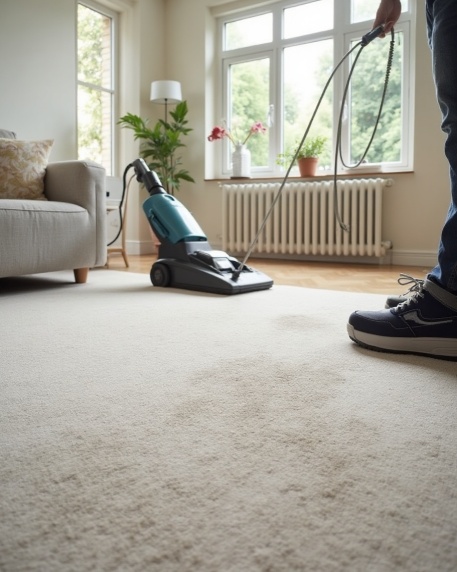
Vacuuming Properly Makes a Big Difference
Vacuuming isn’t just about frequency — it’s about doing it correctly.
A HEPA vacuum system is particularly useful in London homes because it traps fine dust particles rather than releasing them back into the air.
For best results:
- Vacuum high-traffic areas at least 2–3 times per week
- Go slowly over each section to allow proper suction
- Use attachments for edges and corners
In flats, where airflow is limited, dust settles quickly. Regular vacuuming helps prevent it from embedding deeper into the carpet.
Dealing With Spills Before They Set
Spills are one of the most common causes of permanent staining. What matters most is how quickly and how carefully they’re handled.
In real situations:
- Blot the spill immediately using a microfibre cloth
- Avoid scrubbing, as this pushes the stain deeper
- Use a suitable cleaning solution depending on the type of stain
For example, food-based stains respond differently to grease marks, which often require a degreaser to break down oils.
A common mistake is over-wetting the area. Too much moisture can seep into the underlay and lead to odours or mould, especially in properties with limited ventilation.
Why Steam Cleaning Still Matters
Even with regular maintenance, carpets will eventually need a deeper clean.
Steam cleaning (hot water extraction) is one of the most effective methods because it removes:
- Embedded dirt
- Bacteria
- Allergens
The process works by injecting heated water mixed with cleaning agents into the fibres, then extracting it along with loosened debris.
In many London homes, especially those with pets or children, this is typically needed every 6 to 12 months.
Managing Odours in Carpets
Carpets can hold onto smells longer than expected, particularly in enclosed spaces.
Common sources include:
- Cooking odours
- Pet accidents
- Damp conditions
In flats, poor ventilation can make this worse. Opening windows regularly helps, but deeper odours often require proper extraction cleaning.
Surface sprays may mask smells temporarily, but they don’t remove the cause.
High-Traffic Areas Need Extra Attention
Hallways, living rooms, and stairs tend to wear down faster than other areas.
In many London properties, these zones show:
- Flattened fibres
- Darkened patches
- Faster dirt build-up
Using rugs in these areas can help reduce direct wear on the carpet. Rotating furniture slightly can also prevent uneven usage patterns.
The Reality of Carpet Wear and Limitations
It’s important to understand that not all carpets can be restored fully.
Deep cleaning can improve:
- Appearance
- Hygiene
- Texture (to some extent)
But it cannot:
- Repair worn or frayed fibres
- Remove bleach damage
- Restore heavily aged carpets
We often see this in older London buildings where carpets have been in place for years. In these cases, cleaning helps maintain the condition but won’t make them look new.
When Professional Cleaning Is the Better Option
There are situations where DIY maintenance simply isn’t enough.
This includes:
- End of tenancy requirements
- Heavy staining or odours
- Moving into a new property
- Post-renovation dust
Professional carpet cleaning uses equipment that delivers deeper extraction than standard home machines.
Most jobs in London take between 1 to 4 hours depending on the size of the property and the condition of the carpets.
How to Prepare for a Carpet Cleaning Visit
Preparation can make the process smoother and more effective.
Typically, this involves:
- Clearing small items and light furniture
- Vacuuming beforehand (if possible)
- Ensuring access to the property
In some London buildings, access and parking can affect setup time. For example, flats without lifts or limited street parking may require additional planning.
Extending the Life of Your Carpet
With consistent care, carpets can last significantly longer.
Practical steps include:
- Regular vacuuming
- Immediate stain treatment
- Periodic deep cleaning
- Reducing indoor dirt exposure
In busy households, these habits help maintain both appearance and hygiene without needing constant professional intervention.
Related Cleaning Services to Consider
Carpets are only one part of the overall cleanliness of a home.
In many cases, properties also benefit from:
- Upholstery cleaning for sofas and chairs
- End of tenancy cleaning for full property resets
- Kitchen and bathroom deep cleaning, especially where grease or limescale builds up
For example, limescale is a common issue in London due to hard water, particularly around sinks and taps. Addressing these areas alongside carpet cleaning creates a more consistent result across the property.
Final Thoughts
Keeping carpets clean in London isn’t about perfection — it’s about managing real-life use in busy environments.
With the right approach, including regular maintenance and occasional professional cleaning, carpets can stay in good condition for much longer. The key is understanding how dirt builds up, acting early when issues appear, and knowing when deeper cleaning is needed.
In many London homes, this balance is what keeps carpets looking presentable without unnecessary replacement.
What Our Clients Say

“Professional, reliable, and efficient! SATSU handled our office carpets with care, and the results were outstanding. The team was friendly, and the service was seamless from start to finish.”
“Absolutely brilliant service. The technicians were courteous and took great care with my delicate rugs. The carpets dried quickly, and the whole process was stress-free. I will definitely use SATSU again.”
“SATSU’s team was fantastic. They were prompt, explained the cleaning process clearly, and the carpet looks brand new. The eco-friendly products were a big plus for me. Excellent value for money.”
“SATSU did an amazing job on our living room carpet! The stains from our kids and pets were completely gone, and the carpet feels so fresh. The team was punctual, friendly, and very professional. Highly recommend!”
“I’ve tried several carpet cleaning companies before, but SATSU exceeded my expectations. They used steam cleaning that got deep into the fibres, and the results were incredible. My office carpets have never looked better!”
“I had my sofas and carpets cleaned by SATSU, and I’m so impressed. The stains lifted completely, and there’s no lingering chemical smell. Their attention to detail really sets them apart.”